Automating PROM Collection: AI-Powered Patient Outcomes Monitoring
Dr. Lim stared at the spreadsheet and sighed. Out of 847 knee replacement patients in the past year, she had complete outcome data for exactly 287. That's a 34% response rate—and that was after her team spent hundreds of hours making phone calls.
"We know the surgeries are going well," she told me. "Our patients tell us in clinic. But we can't prove it to anyone because we can't get them to fill out the surveys."
This is the PROM paradox. Patient-Reported Outcome Measures are increasingly required by accreditors, insurers, and registries. They're essential for quality improvement. But getting patients to actually complete them? That's where traditional approaches fail.
Until you stop treating PROM collection like a survey and start treating it like a conversation.
The Day Everything Changed at ALTY Orthopaedic
ALTY Joint & Spine Centre faced the same challenge Dr. Lim did. Their PROM completion rates hovered around 35%. Two staff members spent their entire week chasing patients by phone. Data arrived weeks late, often incomplete.
Then they tried something different.
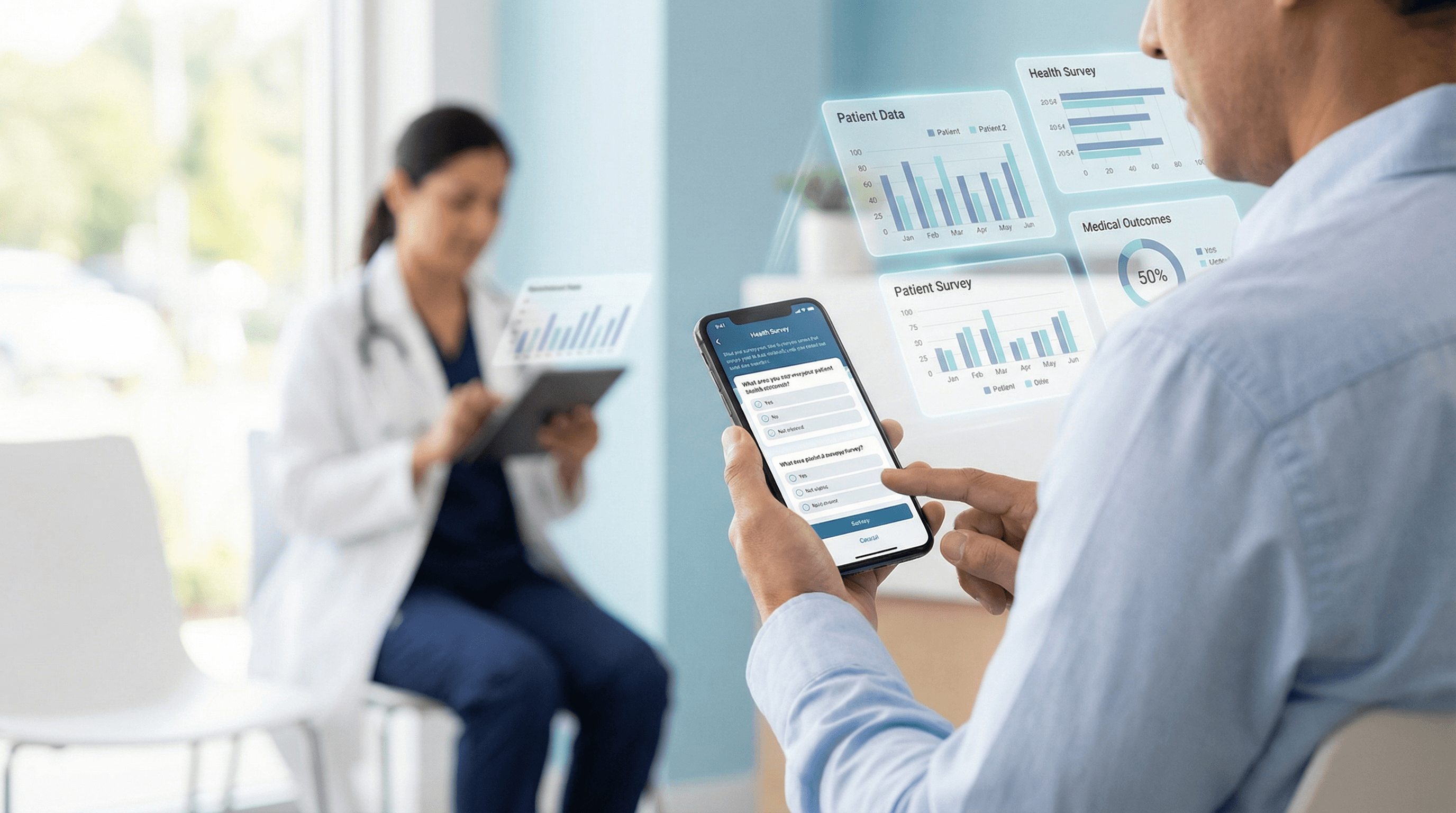
Instead of mailing paper forms or sending portal links nobody clicked, they sent WhatsApp messages. Not clinical surveys—conversations.
"Hi Mr. Chen! It's been 6 weeks since your knee surgery with Dr. Ahmad. How are you feeling? On a scale of 1-10, how would you rate your pain today?"
Mr. Chen replied: "Much better! Maybe 3?"
The AI followed up: "That's great progress! A few quick questions to track your recovery—this takes about 3 minutes. Ready to continue?"
Three minutes later, a complete Oxford Knee Score was collected. No paper. No portal login. No phone call.
The results after six months:
- Completion rate: 83% (up from 35%)
- Staff time on PROM collection: -75%
- Registry compliance: 100%
- Patient satisfaction with the process: 4.8/5
Dr. Ahmad couldn't believe it. "Patients who ignored our emails for months would reply to WhatsApp in minutes. We were just asking on the wrong channel."
Why Traditional PROM Collection Fails
Let's be honest about why the old approaches don't work:
Paper forms get lost. Patients receive them, put them aside "for later," and forget. The ones who do complete them often do so in the waiting room, rushing through to get to their appointment.
Email surveys go to spam. Or they get buried under 200 other emails. Open rates are typically 15-20%. Completion rates are even worse.
Portal logins require patients to remember another password. Most don't bother. The ones who do often abandon the survey halfway through.
Phone calls are expensive and intrusive. Patients don't answer unknown numbers. When they do answer, they're usually busy. And you're paying someone $25/hour to have 3-minute conversations.
The underlying problem isn't that patients don't want to help. It's that we've made it inconvenient, impersonal, and easy to ignore.
The WhatsApp Difference
WhatsApp changes everything because of one simple fact: 95% of messages get opened. Most within 3 minutes.
Compare that to:
- Email: 20% open rate
- Portal notifications: 12% click rate
- Phone calls: 60% answer rate (and dropping)
But it's not just about open rates. WhatsApp enables a fundamentally different approach to PROM collection.
From Survey to Conversation
Traditional PROM collection: "Please complete this 12-question survey about your recovery."
AI-powered WhatsApp collection:
"Hi Mrs. Tan! How's your hip feeling today, 3 months after surgery?"
"Pretty good actually! Still some stiffness in the morning."
"That's normal at this stage. On a scale of 0-10, where 0 is no pain and 10 is worst imaginable, how would you rate any hip pain you've had in the past week?"
"Maybe a 2 or 3."
"That's excellent progress! A few more questions to track your recovery—takes about 2 minutes. What's been hardest: walking, climbing stairs, putting on socks, or something else?"
Same clinical data. Completely different experience. Patients aren't filling out a form—they're having a chat about how they're doing.
Real-Time Clinical Intelligence
Here's where AI adds real value beyond collection.
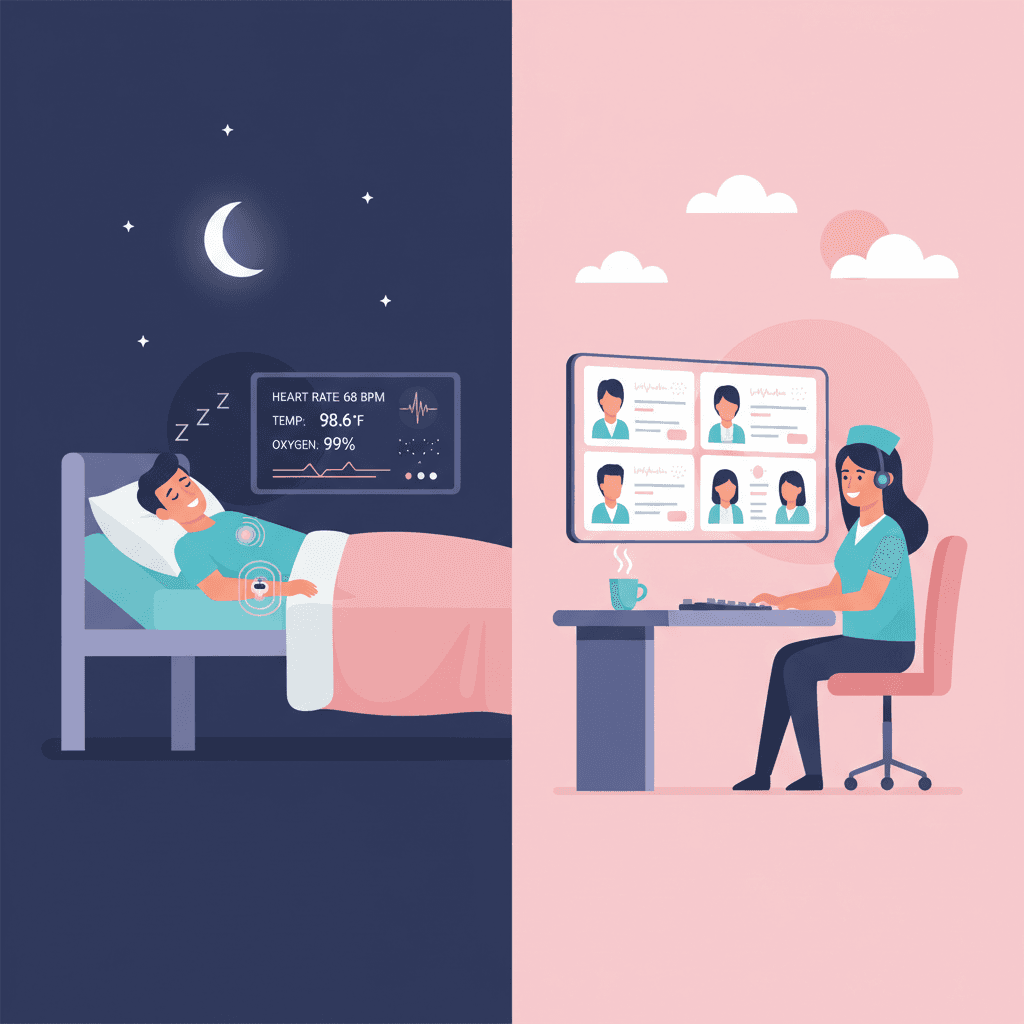
When Mr. Rahman reported increasing pain scores at week 6—against the expected recovery trajectory—the system didn't just record the data. It flagged the response immediately and sent an alert to his care team.
A nurse called within 2 hours. Turned out he'd developed a minor infection that was caught and treated early. Without the automated monitoring, that infection might have festered for weeks until his next scheduled appointment.
"The AI doesn't replace clinical judgment," his surgeon explained. "It makes sure we have the information we need to use that judgment."
What High-Performing PROM Programs Look Like
After seeing dozens of implementations, patterns emerge. Here's what separates the 80%+ completion programs from the 30% strugglers:
The Right Timing
Good: Send the initial PROM request at 10 AM on Tuesday, when people are settled into their day but not exhausted.
Bad: Send at 8 PM Friday when people are relaxing and don't want to think about medical stuff.
Good: Follow up within 48 hours if no response—they might have meant to reply but forgot.
Bad: Wait a week, by which time they've completely forgotten.
The Right Framing
Good: "How are you recovering? We'd love to hear how you're doing."
Bad: "Please complete this mandatory outcome survey."
Good: "Dr. Chen asked us to check in on your progress."
Bad: "This survey is required for quality reporting purposes."
Patients respond when they feel cared for, not audited.
The Right Length
Good: Break long instruments into conversational chunks. "That was helpful—3 more questions about daily activities, if you have a moment?"
Bad: Send a single message with 20 questions and expect completion.
The Oxford Hip Score has 12 questions. Sending all 12 at once feels like homework. Sending them conversationally—4 at a time with acknowledgment in between—feels like a chat.
The Numbers from Real Implementations
KKH Orthopaedic Surgery
KK Women's and Children's Hospital implemented AI-powered PROM collection for their orthopedic department:
| Metric | Before | After |
|---|---|---|
| Completion rate | 40% | 78% |
| Staff time on follow-up | 15 hrs/week | 4 hrs/week |
| Data delay | 2-3 weeks | Real-time |
| Missing data for registry | 45% | 8% |
ALTY Joint & Spine
| Metric | Before | After |
|---|---|---|
| Completion rate | 35% | 83% |
| Dedicated PROM staff | 2 FTE | 0.5 FTE |
| Patient complaints | Frequent | Rare |
| Clinical alerts generated | 0 | 12/month (avg) |
Multi-Site Orthopedic Group (50 Surgeons)
| Metric | Before | After |
|---|---|---|
| Annual PROM completions | 2,100 | 5,400 |
| Staff cost savings | — | $180,000/year |
| Registry incentives captured | $0 | $50,000/year |
| JCI accreditation findings | 3 | 0 |
Implementation: What to Expect
Let me be realistic about what implementation actually involves:
Week 1: Configuration
- Choose which PROMs to collect (start with 1-2 instruments)
- Define collection schedule (pre-op, 6 weeks, 3 months, 1 year, etc.)
- Configure message templates and conversation flows
- Connect to your scheduling system for automatic triggers
Week 2-3: Pilot
- Start with a single surgeon or procedure type
- Monitor every patient interaction
- Refine messaging based on response patterns
- Train staff on exception handling
Week 4+: Expansion
- Roll out to additional surgeons/procedures
- Enable automated reporting
- Integrate with registry submissions
- Optimize based on data
Most implementations see significant improvement by week 3. Full optimization takes 2-3 months.
The Clinical Value Beyond Compliance
Here's what surgeons tell us after implementing automated PROM collection:
"I finally have data to show patients what to expect." When you have thousands of completed PROMs, you can show new patients realistic recovery trajectories. "Most patients rate their pain at 3 by week 6. You're at 4—that's normal."
"We catch problems earlier." Automated monitoring identifies outliers immediately. Patients who report unexpected pain or functional decline get attention before their next scheduled visit.
"We can prove our outcomes." When payers ask "How do your outcomes compare to benchmarks?", you have the data. When competing for contracts, you can demonstrate quality.
"Registry submissions are no longer a nightmare." What used to take weeks of staff time now happens automatically.
Getting Started
If your PROM completion rates are below 50%, you're leaving clinical value on the table. If they're below 30%, you're likely failing accreditation requirements or registry participation criteria.
The fix isn't more staff. It's smarter collection.
Bot MD's PROM solution includes:
- 50+ validated instruments pre-configured and ready to deploy
- Conversational collection that feels human, not robotic
- Omnichannel delivery: WhatsApp, SMS, Messenger—wherever patients respond
- Real-time clinical alerts for concerning responses
- Direct registry integration for automatic submission
- Analytics dashboards showing completion rates, trends, and benchmarks
Book a demo to see what 80%+ completion rates could mean for your outcomes program. We'll show you exactly how hospitals like yours transformed their PROM collection from an administrative burden to a clinical asset.
The data your patients are willing to share—you just have to ask them the right way.