AI Chatbots for Hospitals: The Complete 2026 Guide
Picture this: It's 2 AM at a busy hospital in Singapore. A worried mother texts asking if her child's fever warrants an emergency visit. In the old days, that message would sit unanswered until morning—or worse, she'd rush to an already overwhelmed ER. Today, an AI chatbot responds within seconds, asks the right questions, and either calms her fears or guides her to urgent care. That's the reality of healthcare AI in 2026.
The Breaking Point That Changed Everything
Dr. Sarah Chen still remembers the day her hospital's call center collapsed under pressure. It was flu season 2023, and the phones wouldn't stop ringing. Staff worked overtime. Patients waited on hold for 45 minutes. Some simply gave up and went to competitors. "We were losing patients—and revenue—simply because we couldn't answer the phone fast enough," she recalls.
This story plays out at hospitals worldwide. The numbers paint a stark picture:
- The average hospital receives 3,000+ calls daily—most are simple questions that don't need a human
- 67% of patients will switch providers after a poor communication experience
- Staff spend 4 hours per day on repetitive tasks that AI could handle
- After-hours inquiries represent $2.3 million in lost annual revenue for mid-sized hospitals
Something had to change. And it did.
Meet the New Front Desk: AI That Actually Works
When Mount Elizabeth Hospital in Singapore first deployed their AI chatbot, the staff were skeptical. "We'd tried chatbots before," admits Operations Director James Wong. "They were terrible—patients hated them."
But this was different. The new AI didn't just spit out generic answers. It understood context. It remembered patient history. It knew when to escalate to humans. Within three months:
- 83% of routine inquiries were handled without human intervention
- Patient wait times dropped from 45 minutes to 45 seconds
- Staff could finally focus on complex cases that needed their expertise
- The hospital recovered $300,000 in previously lost revenue
How Modern Hospital AI Actually Works
Forget the clunky chatbots of 2020. Today's healthcare AI is built differently:
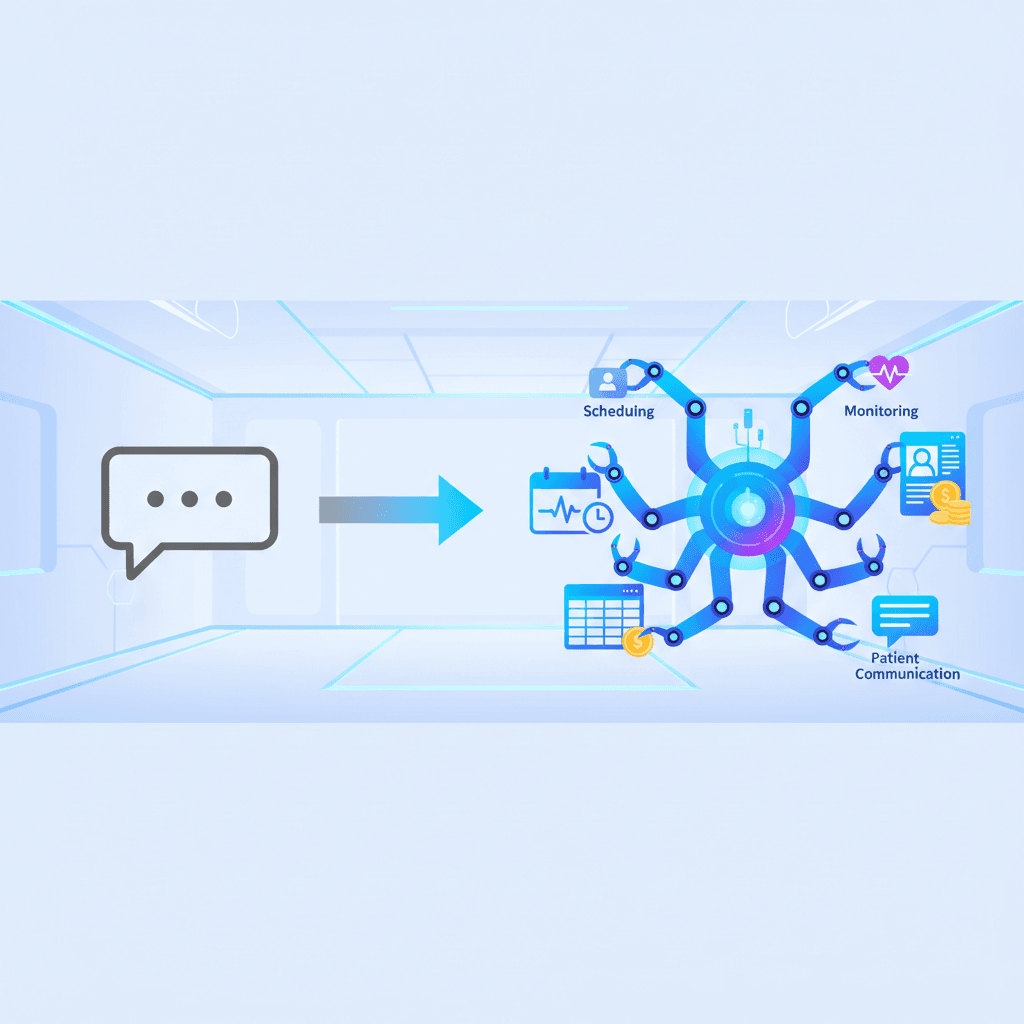
Intelligent Appointment Management
Maria needed to reschedule her mother's cardiology appointment. In the past, this meant navigating a phone tree, waiting on hold, and hoping the receptionist could find an alternative slot. Now? She sends a WhatsApp message at 10 PM. The AI shows available times, books the appointment, syncs it to her calendar, and sends a reminder—all in under two minutes.
Real hospitals are seeing:
- 30% reduction in no-shows through smart reminder sequences
- Waitlist automation that fills cancelled slots within hours, not days
- Multi-language support that serves diverse patient populations naturally
Pre-Visit Preparation That Patients Actually Complete
Here's a dirty secret of healthcare: most patients show up unprepared. They haven't fasted when they should. They've forgotten their insurance cards. They didn't complete pre-registration.
AI changes this by meeting patients where they already are—WhatsApp, Viber, SMS. Instructions arrive in bite-sized messages. Reminders come at the right time. Forms are mobile-friendly. One surgical center saw pre-operative compliance jump from 60% to 95% after implementing automated preparation workflows.
24/7 Support That Feels Human
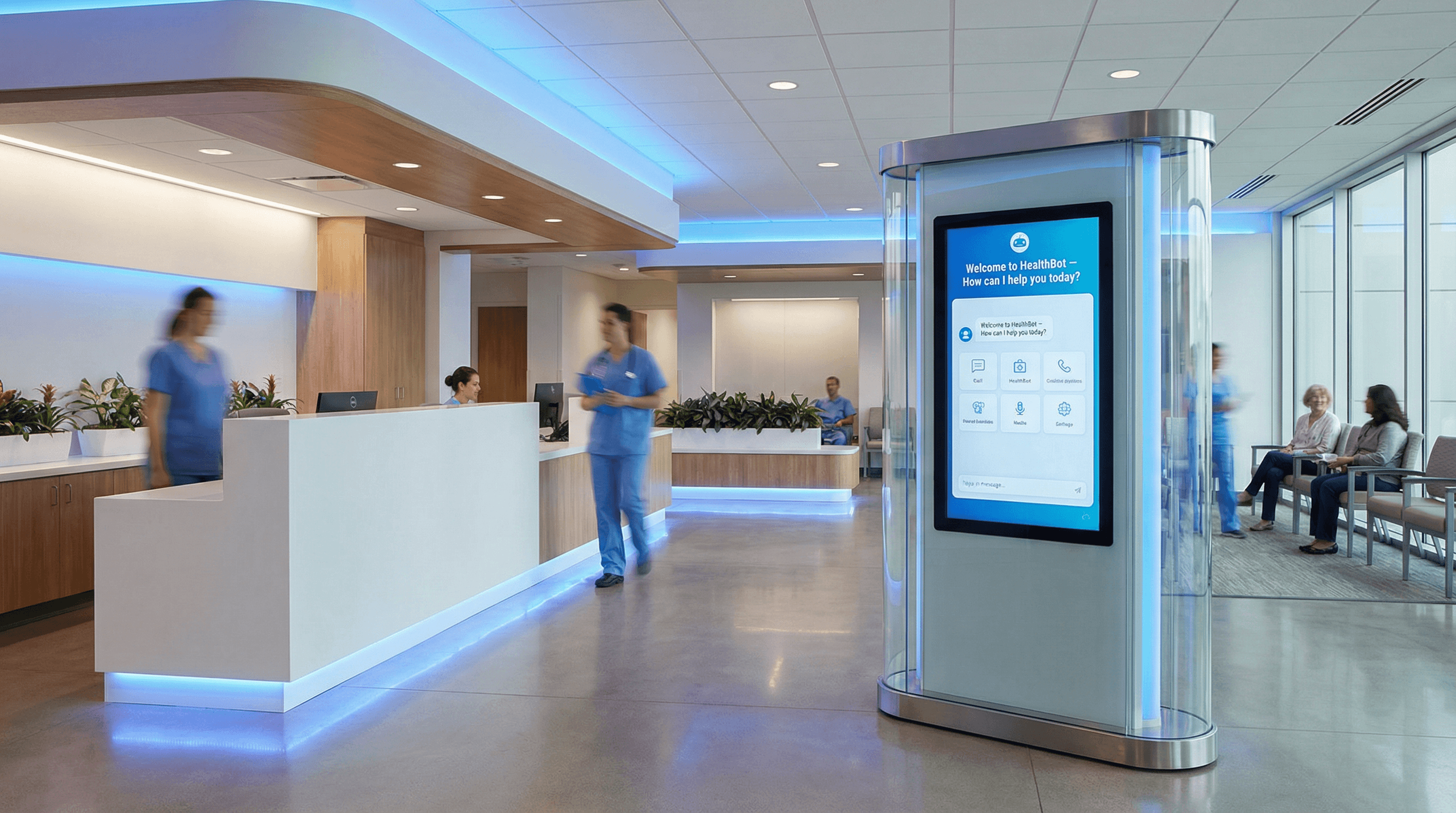
The best healthcare AI doesn't feel like talking to a robot. It's conversational. It's empathetic. It knows when someone is anxious and adjusts its tone accordingly.
When Mr. Tan messaged at 3 AM worried about post-surgery symptoms, the AI didn't just provide information—it asked clarifying questions, assessed urgency, and either reassured him or connected him with on-call staff. "I felt like someone was actually listening," he said later. "At 3 in the morning."
The Numbers That Make CFOs Pay Attention
Let's talk ROI, because ultimately, hospital leadership needs to see the business case:
| What Changed | The Impact |
|---|---|
| No-shows decreased | 30% fewer missed appointments |
| Inquiry-to-booking conversion | 83% (up from 45%) |
| Staff time on routine tasks | 70% reduction |
| After-hours revenue capture | $300K+ annually |
| Patient satisfaction scores | 25% improvement |
One private hospital in Malaysia calculated that every 1% reduction in no-shows saved them $47,000 annually. After implementing AI-driven reminders, they saw a 12% drop. Do the math.
A Tale of Two Hospitals
Hospital A (Traditional Approach):
- Patients call during business hours, wait 15-20 minutes
- Staff manually send appointment reminders (when they remember)
- After-hours inquiries go to voicemail
- No-show rate: 28%
- Average cost per patient acquisition: $150
Hospital B (AI-Enhanced):
- Patients message anytime, get responses in seconds
- Automated reminders via WhatsApp at optimal intervals
- AI handles inquiries 24/7, escalating only when necessary
- No-show rate: 12%
- Average cost per patient acquisition: $45
Same city. Same patient demographics. Vastly different results.
What to Look For in Healthcare AI
Not all chatbots are created equal. After seeing dozens of implementations succeed (and fail), here's what separates winners from losers:
It Must Understand Healthcare
Generic chatbots trained on customer service data will fail in healthcare. The AI needs to understand medical terminology, clinical workflows, and most importantly—when a situation is urgent. Ask vendors: "How was your AI trained? On what healthcare data?"
Integration is Non-Negotiable
A chatbot that can't access your scheduling system, EMR, or patient database is just a fancy FAQ. True value comes from integration—when the AI knows a patient's appointment history, preferred doctor, and insurance status before they even ask.
Multi-Channel or Nothing
Your patients aren't all on WhatsApp. Some prefer Viber (especially in the Philippines). Others use Telegram or Messenger. A few still want SMS. The AI should meet patients wherever they are, with a consistent experience across channels.
Local Compliance Built In
Healthcare data is sensitive. Your AI partner must understand HIPAA, PDPA (Singapore), PDPB (Malaysia), and other regional regulations. This isn't something you can bolt on later.
The Implementation Journey: Honest Expectations
Let's be realistic about what implementation actually looks like:
Weeks 1-2: Foundation
- Connect to your scheduling and patient systems
- Configure conversation flows for your specific services
- Train the AI on your hospital's FAQs and policies
Weeks 3-4: Soft Launch
- Deploy with a small patient segment
- Gather feedback from staff and patients
- Iterate on conversation quality
Weeks 5-8: Full Rollout
- Expand to all channels and patient populations
- Train staff on the new workflows
- Establish escalation protocols
Month 3+: Optimization
- Analyze conversation data for insights
- Expand to new use cases (pre-admission, post-care)
- Continuously improve based on outcomes
The hospitals that succeed treat this as a transformation project, not just a technology purchase. Executive sponsorship matters. Staff buy-in matters. Patient communication about the new channels matters.
What's Coming Next
The AI chatbots of today are impressive, but they're just the beginning:
Voice AI is Here Some hospitals are already using AI to handle phone calls—not just route them, but actually have conversations. Imagine calling your doctor's office and having a natural conversation with AI that schedules your appointment, answers questions, and only transfers you to a human when truly needed.
Predictive Engagement Why wait for patients to reach out? Next-generation AI identifies patients at risk of missing appointments based on historical patterns and proactively engages them. One hospital reduced no-shows by an additional 15% simply by identifying and reaching out to high-risk patients.
Integrated Care Journeys The future isn't just chatbots—it's AI that orchestrates the entire patient journey. From first inquiry to post-discharge follow-up, every touchpoint optimized, every communication personalized.
Your Next Step
The question isn't whether AI will transform hospital patient engagement—it already is. The question is whether your hospital will lead this transformation or struggle to catch up.
Bot MD's healthcare AI platform is trusted by leading hospitals across Singapore, Malaysia, Philippines, Thailand, and Indonesia. We've helped healthcare organizations:
- Recover $300K+ in annual revenue through intelligent scheduling
- Achieve 83% appointment conversion from inquiries
- Reduce administrative burden by 70%
- Deploy in 4-8 weeks, not months
The hospitals that started this journey two years ago now have an insurmountable advantage. Don't wait another two years.
Book a demo and see what AI-powered patient engagement looks like in action.